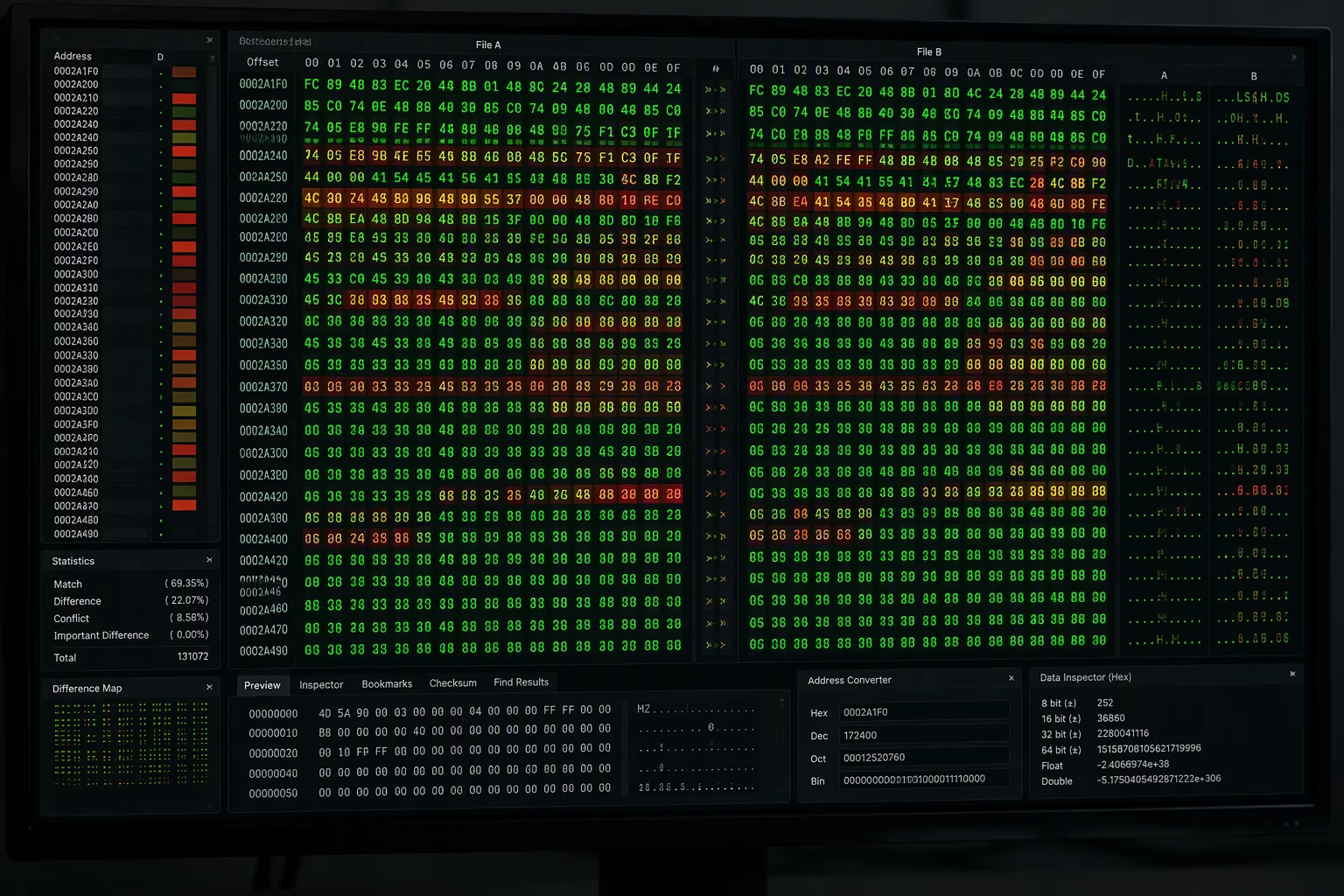
Cloud Engine & Core Architectural Overhaul
ECUTools has officially deployed a complete ground-up redesign of its RocketDump platform, bringing massive improvements to online memory dump parsing, crash data identification, and binary delta inspection. Automotive calibration and hardware diagnostic engineers frequently deal with complex microcontroller memory structures, where subtle byte discrepancies across microcode blocks can indicate corruption or incomplete transfers. The rebuilt infrastructure replaces legacy client-side scripts with a hardened distributed compute engine that parses raw flash and EEPROM files in under two seconds.
The new interface emphasizes structured traceability over cosmetic changes. Calibrators can now upload multi-segment memory dumps directly into an isolated sandbox where data segments are automatically partitioned according to predefined processor memory maps. The server validates base addresses against known OEM reference banks, flagging unexpected block lengths, offset discrepancies, or misaligned headers before any subsequent comparative analysis begins.
Binary Structure & Validation Specifications
To maintain strict audit standards during diagnostic readouts and memory restoration, RocketDump has standardized its internal processing pipeline against universal binary exchange schemas. The engine handles full-read binaries, shadow flash allocations, and serialized virtual EEPROM structures with verified offset tagging:
| Parameter / Requirement | Ledger Specification |
|---|---|
| Microcontroller Memory Support | TriCore AURIX (TC2xx/TC3xx), Renesas RH850, MPC57xx, ST SPC58 |
| Checksum Validation Speed | Sub-50ms cryptographic algorithm recalculation per memory block |
| Dump Comparison Method | Full EEPROM / DFLASH / PFLASH multi-layer comparison |
| Traceability Export Formats | JSON metadata schema, standardized hex diff patch, CSV audit report |
Differential Integrity & Flash Verification
A major pain point in microcontroller memory diagnostics has always been the risk of silent byte shifts during bench read operations. Incomplete pinouts, ground bounce, or improper power sequencing can create phantom changes in binary dumps that appear genuine to an untrained eye. The updated RocketDump engine introduces algorithmic cross-referencing against verified golden baselines to ensure that non-volatile memory partitions are structurally intact.
Baseline Verification Protocol Note
Never apply corrective memory dump edits without first cross-referencing the factory bootloader signatures and immutable hardware configuration sectors (OTP/UCB). RocketDump locks critical configuration blocks from modification to prevent accidental ECU lockouts.
Furthermore, the platform now automatically separates volatile calibration adaptation blocks from core firmware logic. When comparing an in-service dump against a baseline reference image, RocketDump isolates live learning tables—such as fuel trims or sensor calibration offsets—allowing software engineers to verify whether discrepancies stem from normal runtime writes or unauthorized binary alterations.
Automated Ingestion & Ledger Workflow
Integrating RocketDump data extracts into the CalibrationDiff Ledger framework requires adhering to structured documentation steps to ensure total traceability across team handoffs:
- Ingest raw binary dumps directly through the cryptographically verified secure upload portal.
- Perform an automated memory partition scan to verify hardware configuration sectors and checksum health.
- Cross-reference identified variance offsets against the documented change ledger baseline.
- Export the verified differential report with signed timestamp hashes for permanent audit archiving.