Database Scope & Automated Routine Architecture
Automated ECU processing platforms rely heavily on structured lookup databases to isolate configuration maps, sensor calibration tables, and protection algorithms from core control logic. The September release from TuningBot introduces comprehensive map identification packages for modern multi-core microcontrollers, expanding recognition across complex TriCore Aurix and Renesas architectures. This update targets deterministic file handling, minimizing unintended binary shifts when specific functional adjustments are requested.
In high-throughput calibration environments, automated services often serve as an initial processing step. However, blind reliance on cloud-processed output introduces serious calibration risk. When an automated script parses binary dumps, subtle differences in software versions can shift table offsets by several bytes. Understanding how the updated database identifies structure boundaries allows calibrators to systematically verify that every automated change corresponds precisely with intended parameters.
Technical Architecture & Memory Segmentation
The latest definition database structures its memory maps to reflect modern electronic control unit layouts, maintaining distinct partitions between read-only boot regions, operational software code, and calibratable parameter blocks. The table below outlines key technical boundaries implemented in this September release.
| Parameter / Requirement | Ledger Specification |
|---|---|
| Target Processor Families | Infineon TriCore TC2xx/TC3xx, Renesas RH850, STMicroelectronics SPC58 |
| Checksum Computation | Automatic verification for CRC32, SHA-256 block hash, and RSA digital signatures |
| Offset Resolution Method | Deterministic pattern matching with dynamic base-address indexing |
| Audit Output Compatibility | Full raw hex export and structured differential change manifest |
Verification & Differential Traceability Standards
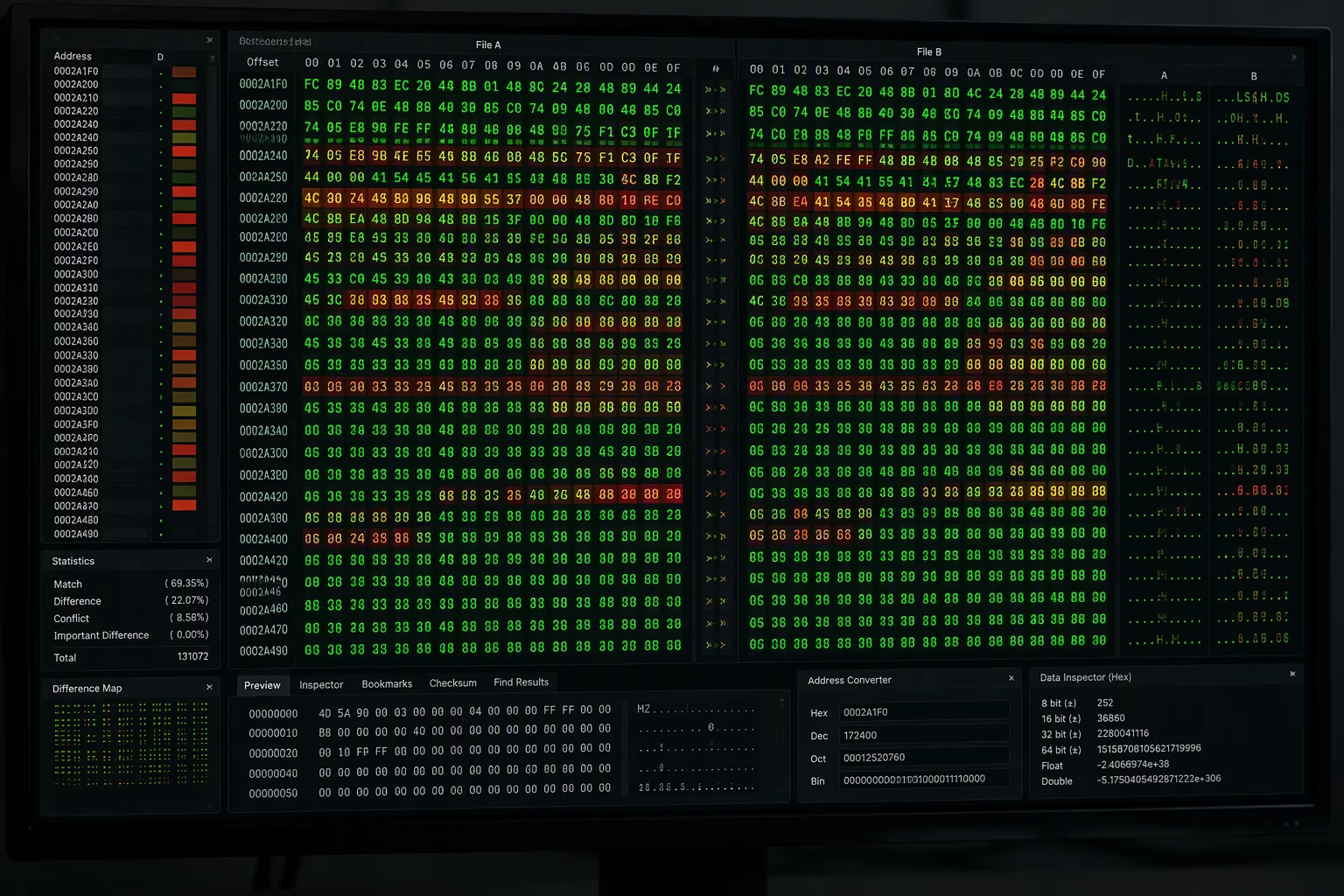
Automated file modifications cannot be treated as black-box solutions. When a service script runs on an engine control file, the responsible technician must inspect the raw binary diff before committing changes to an EEPROM or flash chip. Without strict differential auditing, unrecorded byte changes can silently disable diagnostic reporting, disrupt safety torque interventions, or corrupt unrelated system maps.
Calibration Audit Rule for Automated Databases
Every file modified through an automated database tool must be subjected to a 1:1 binary comparison against its unedited read-only baseline. Record all altered memory addresses, hex values, and verification checksums in your primary change ledger prior to flash execution.
By enforcing a rigorous change ledger entry for each database transaction, engineering teams establish an immutable audit trail. If a control unit behaves erratically during subsequent road or dynamometer testing, the technician can immediately determine whether the discrepancy originated from custom map adjustments or an unexpected database patch pattern.
Recommended Shop Intake & Validation Protocol
To maximize reliability when integrating third-party software updates into daily calibration routines, workshops should follow a disciplined four-stage process:
- Read and Archive Pristine Baseline: Perform a complete bench or boot read of the original ECU memory, storing the unedited binary file with cryptographic checksums in a dedicated write-protected directory.
- Execute Database Service Routine: Process the target binary using the September database definitions, exporting the resulting file alongside the software's execution report log.
- Conduct Side-by-Side Hex Analysis: Load both original and patched files into a dedicated comparison editor to verify that modifications are confined strictly to intended memory addresses.
- Document Changes in Change Ledger: Log all altered memory ranges, vehicle identification numbers, software revision identifiers, and author signatures in the project documentation ledger.