Hardware Interface Architecture and Direct Pinout Mapping
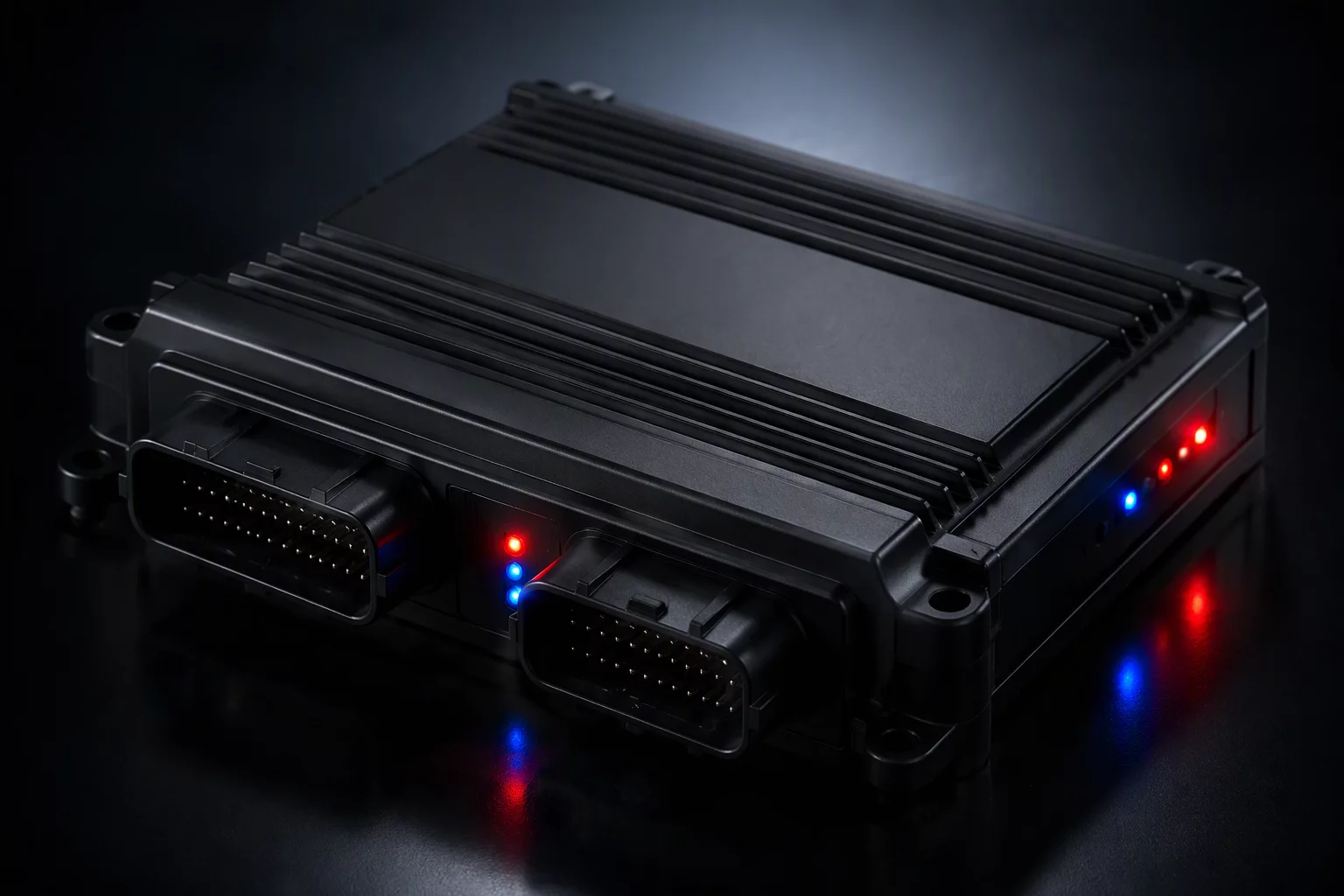
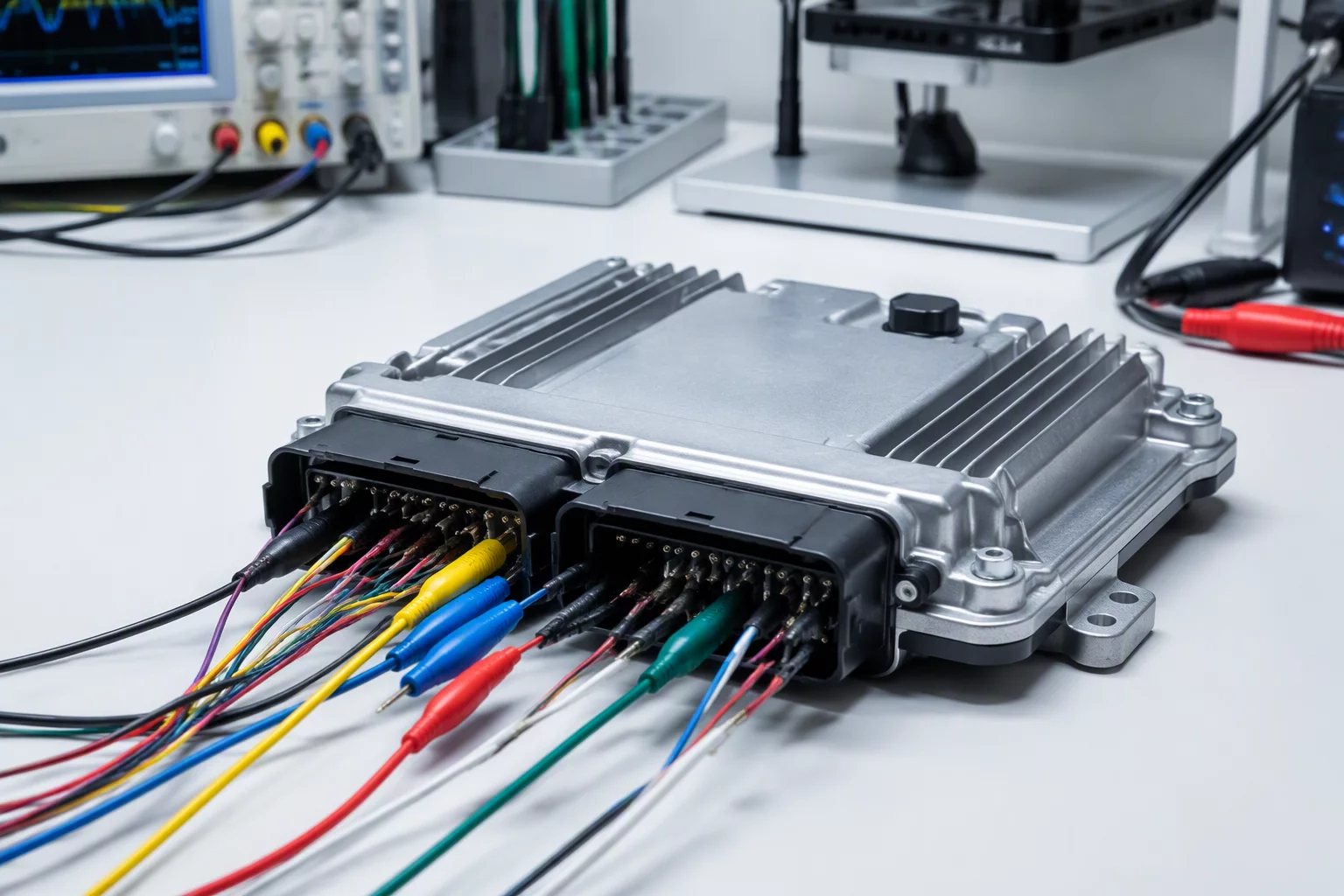
The Denso VEA (Volvo Engine Architecture) Gen2 engine management platform relies on sophisticated multi-core microcontrollers that previously necessitated destructive casing separation for board-level boot mode access. AutoTuner bench mode introduces direct harness communication through the primary 96-pin and 64-pin connector banks. This eliminates mechanical strain on the moisture-sealed aluminum enclosure while providing unrestricted access to full internal flash memory.
Diagnostic bench harnesses deliver regulated 13.8V power rails and dual CAN high-speed channels directly to the controller microprocessor. Operating outside the vehicle gateway prevents intermittent communication drops caused by central electronic module (CEM) bus sleep cycles or auxiliary accessory interference during extended extraction sessions.
Bench Environment Prerequisites
Stable bench operations require controlled laboratory conditions to avoid flash write corruption:
- Regulated bench power supply maintaining clean 13.8V with ripple under 20mV.
- Direct 120-ohm termination resistance across CAN high and CAN low lines.
- Ground potential equalization between programmer chassis and ECU cooling heatplate.
"Direct bench reading guarantees a bit-for-bit physical image of the microcontroller memory, turning speculative tuning diagnostics into an exact differential science."
Full Binary Dump Extraction vs OBD Virtual Read
Virtual read routines commonly provided by OBD diagnostic tools rely on server-side databases of pre-stored calibration files. When a vehicle contains updated dealer calibration campaigns or intermediate assembly software revisions, virtual matching often supplies an mismatched base file. AutoTuner bench extraction reads the physical flash sectors directly, generating a true binary mirror of the vehicle current operating state.
Differential analysis between an OBD virtual file and a true bench dump frequently highlights unmapped configuration bytes, variant coding flags, and regional emissions compliance parameters. Documenting these differences in the change ledger prevents unexpected limp-mode conditions and ensures exact reversion capability should software testing require rolling back to the original baseline.
Calibration Sector Boundaries and Checksum Offsets
Identifying discrete calibration regions within the 4MB full binary dump is essential for safe parameter adjustments. The table below delineates the memory sector addresses, stock hex markers, and modified parameters validated during differential bench testing.
| Parameter Dimension | Stock Calibration | Updated Revision | Validation Status |
|---|---|---|---|
| Main Rail Pressure Map | Hex 0x0018F420 (220 MPa limit) | Hex 0x0018F420 (235 MPa target) | Verified |
| Target Airflow Load Model | Hex 0x0021A800 (Stock MAF scale) | Hex 0x0021A800 (Calibrated airflow) | Verified |
| Torque Demand Request Table | Hex 0x002DC340 (400 Nm ceiling) | Hex 0x002DC340 (450 Nm profile) | Verified |
Traceability Ledger Verification and Rollback Rules
Any calibration modification applied to the Denso VEA Gen2 binary must be recorded in the engineering ledger with associated cryptographic checksums. AutoTuner calculates algorithmic checksums on write; however, independent differential inspection ensures that safety-critical watchdog routines and torque monitoring checksum blocks remain uncorrupted.
Before reflashing modified maps to the vehicle, verify that the exported file maintains identical byte lengths and that non-calibration regions remain untouched. Maintaining an unaltered factory bench dump in the archive guarantees that any unexpected diagnostic trouble codes can be isolated through binary diff comparison rather than speculative guesswork.