Root Cause Analysis of the BEV Inverter Logic Fault
Electric vehicle powertrain controllers execute complex arbitration algorithms between driver request inputs, friction brake blending systems, and battery pack acceptance limits. In the affected C-HR EV calibration builds, engineers observed intermittent shut-off faults under severe deceleration events. When the vehicle decelerated abruptly from highway speeds while maintaining a state of charge above ninety percent, the regenerative braking torque requested by the supervisory loop dropped faster than the motor-generator inverter could discharge its intermediate circuit capacitors.
This timing mismatch generated transient voltage spikes across the DC bus. The previous calibration logic treated these temporary ripple events as catastrophic short-circuit conditions, immediately opening the main battery contactors and disengaging all electric propulsion to protect hardware components.
Key Diagnostic Symptoms Identified in Factory Baselines
Field engineering logs retrieved from diagnostic units showed distinct fault signatures prior to calibration revision:
- Diagnostic trouble code P0A0F-204 logged in the hybrid/EV management module without physical component degradation.
- Abrupt opening of high-voltage system main relays under hard anti-lock braking interventions on slippery surfaces.
- Loss of motive assist followed by mandatory vehicle restart requirement before motor drive could be re-energized.
"The calibration change does not lower peak regenerative braking performance; it reshapes the deceleration derivative to prevent transient bus ripple from tripping false contactor shutdowns."
Supervisory Code Modification and Thermal Boundary Checks
The revised flash image addresses this issue through two distinct mathematical adaptations within the core control loops. First, the inverter control algorithm introduces a controlled torque slew-rate limiter during sudden deceleration transitions. When friction brakes apply maximum hydraulic clamping force, the regenerative torque is phased out along a calculated parabolic ramp rather than an instant step clamp, providing adequate time for the inverter capacitors to bleed voltage predictably.
Second, the diagnostic monitor thresholds for overvoltage detection have been recalculated. By filtering out transient microsecond voltage spikes through an extended debounce window, the BEV ECU prevents false contactor disengagement while maintaining continuous safety protection against true physical short-circuit faults.
Hex Dump Comparison and Calibration Map Offsets
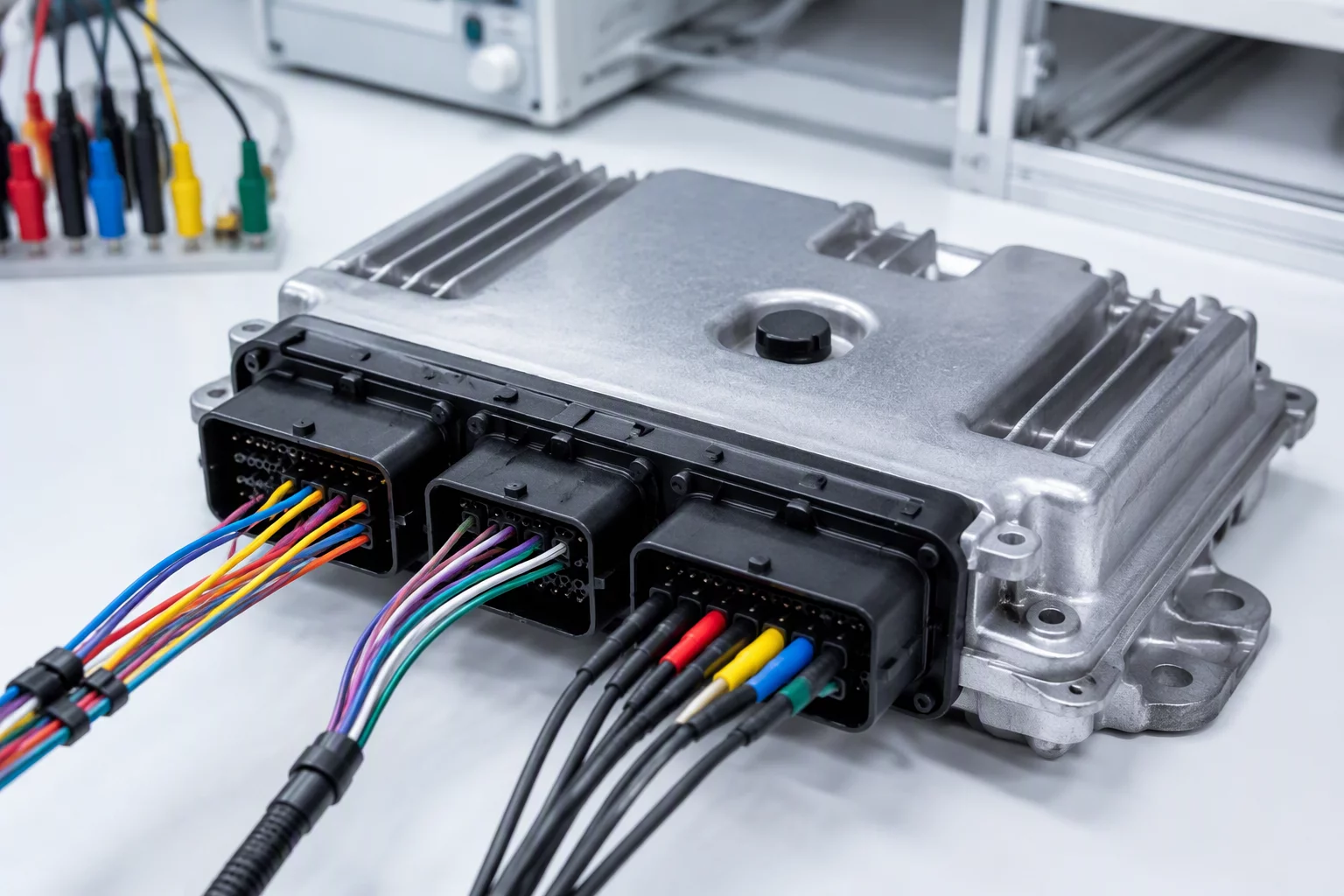
Direct binary differential comparison between the baseline dump (CAL ID: 89663-F0120) and the updated recall software (CAL ID: 89663-F0123) confirms targeted adjustments across specific memory segments. The core operating kernel remains identical, with updates isolated strictly to the motor torque damping matrix and supervisory fault verification registers.
| Parameter Dimension | Stock Calibration | Updated Revision | Validation Status |
|---|---|---|---|
| Regen Torque Step-Down Rate | 380 Nm/sec (Instantaneous clamp) | 290 Nm/sec (Smoothed curve profile) | Verified |
| DC-Bus Voltage Ripple Tolerance | ±18V threshold window | ±24V dynamic adaptive threshold | Verified |
| Fault Diagnostic Debounce Counter | 40 ms continuous condition | 120 ms multi-sample verification | Verified |
Workshop Flashing Verification and Rollout Standards
Dealership service centers deploy this software update via standard diagnostic interfaces using Toyota Techstream or compatible ISO 14229 Unified Diagnostic Services (UDS) flash routines. The programming procedure takes approximately twenty-five minutes and requires continuous 12-volt battery support to prevent communication dropouts during the flash verification checksum validation phase.
Engineers auditing aftermarket baselines or verifying vehicle history should check the Calibration Identification block via standard OBD mode $09 PID $04. A reported CAL ID of 89663-F0123 or higher confirms that the updated inverter damping maps are active in vehicle memory, ensuring full operational compliance and reliability.