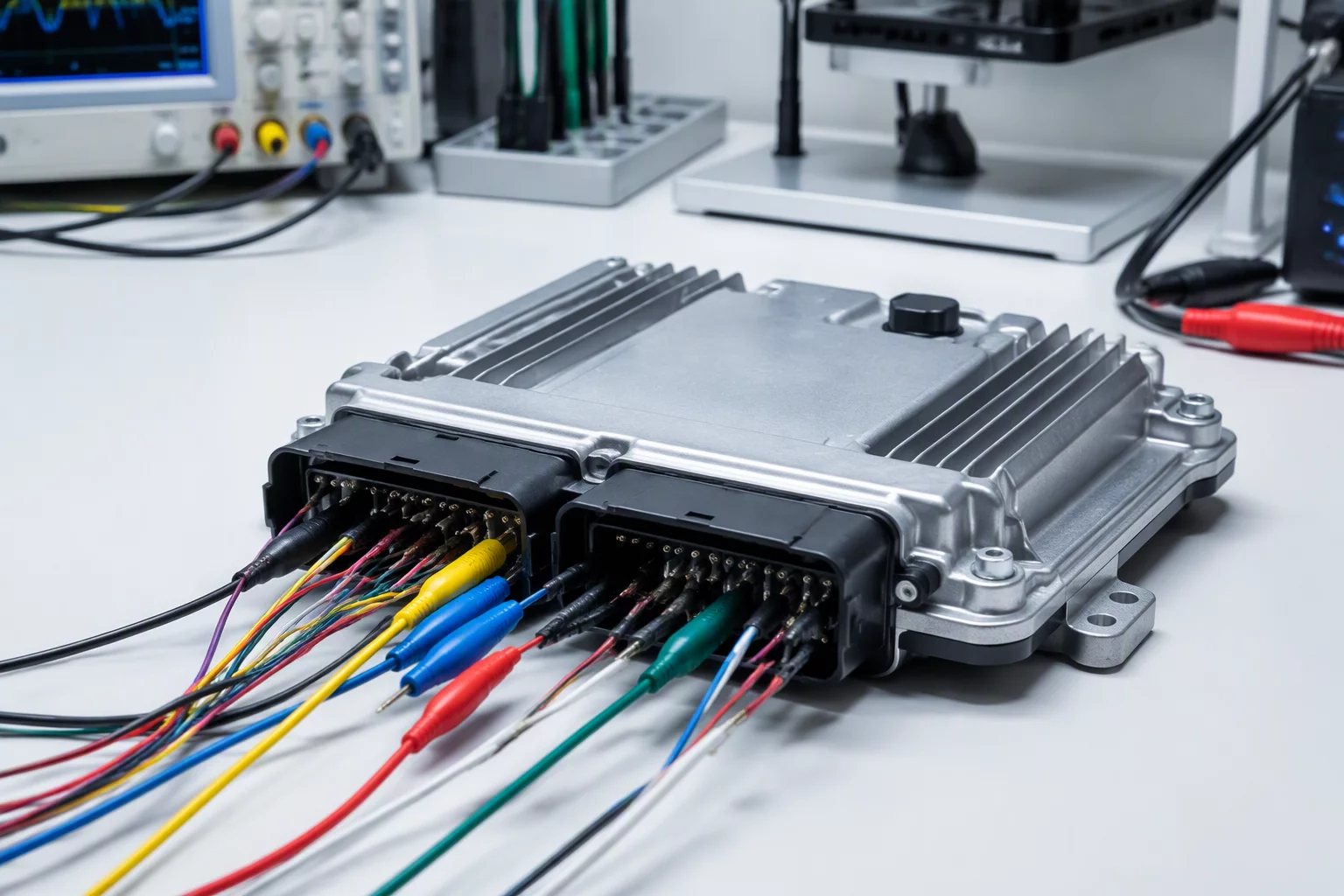
Federal Directives and Diagnostic Gateway Evolution
Technical documentation released by VXDAS details a decisive shift across North American and European regulatory frameworks toward end-to-end cryptographic verification of electronic control modules. Regulatory bodies have expanded anti-tamper enforcement mechanisms to prevent unauthorized payload alteration and undocumented software injection. Instead of relying purely on physical port inspection, federal compliance now evaluates live controller attestation, checksum tables, and cryptographically signed authorization payloads during routine fleet diagnostics.
For software calibrators, workshop technicians, and validation engineers, these statutory updates demand complete transparency in how binary dumps are compared and validated. CalibrationDiff Ledger establishes a disciplined protocol to demonstrate that diagnostic routines interact solely with permitted parameter ranges while documenting every bit-level variance against authenticated factory baselines.
Core Mandates Outlined in VXDAS Documentation
The technical bulletin emphasizes three non-negotiable architectural requirements that every diagnostic interface and calibration team must implement:
- Integration of dynamic PKI-based authentication certificates replacing static 5-digit seed-key algorithms.
- Continuous hardware security module (HSM) checksum verification to prevent runtime memory injection.
- Full lineage tracking of binary dump modifications to establish clear legal distinction between service resets and unauthorized parameter manipulation.
"Stricter federal anti-tamper standards do not ban precise diagnostic calibration; they demand complete cryptographic traceability and structured diff verification for every byte written to vehicle memory."
Cryptographic Seed-Key Exchanges and Firmware Attestation
Central to the VXDAS report is the rapid deprecation of unauthenticated OBD access protocols. Vehicle manufacturers are standardizing on ISO 21434 cybersecurity frameworks, incorporating asymmetric encryption where diagnostic tools must obtain ephemeral security tokens directly from verified vehicle servers. Under this mechanism, any attempt to overwrite flash memory without authenticated digital certificates triggers diagnostic trouble codes and automatically logs tamper flags inside internal flash counter registers.
When comparing version dumps, engineers must therefore verify not only parameter table boundaries but also the preservation of secure boot signatures and diagnostic gateway handshakes. Failing to account for gateway-level security checks can lead to persistent module lockouts and non-compliant validation states during regulatory audits.
Parameter Matrix: Legacy Access vs. Secure Anti-Tamper
Evaluating differences across calibration generations reveals substantial divergence in how security flags and configuration bytes are allocated across modern memory maps. The table below illustrates the technical transition from legacy unencrypted access routines to federal anti-tamper architectures documented in the VXDAS briefing:
| Parameter Dimension | Stock Calibration | Updated Revision | Validation Status |
|---|---|---|---|
| Gateway Authentication | Static 16-bit Seed/Key | Ephemeral TLS/PKI Certificate | Verified |
| Checksum Architecture | Single CRC32 Flash Block | Dual-Layer SHA-256 with HSM Validation | Verified |
| Audit Flash Counter | Re-programmable 8-bit Integer | Cryptographically Signed Write Counter | Verified |
Maintaining Immutable Audit Logs Under Strict Enforcement
As regulatory agencies intensify random field verification and automated emissions inspection monitoring, the burden of proof rests entirely on calibration documentation. A technician must be capable of presenting a step-by-step diff history proving that service procedures or diagnostic calibration adjustments adhered strictly to certified limits.
Maintaining an organized change ledger provides an incontrovertible trail of evidence. By recording the exact baseline binary hash, logging the explicit justification for every parameter delta, and documenting before-and-after verification logs, engineering teams safeguard their workflows against compliance liabilities while maintaining the highest standard of technical excellence.